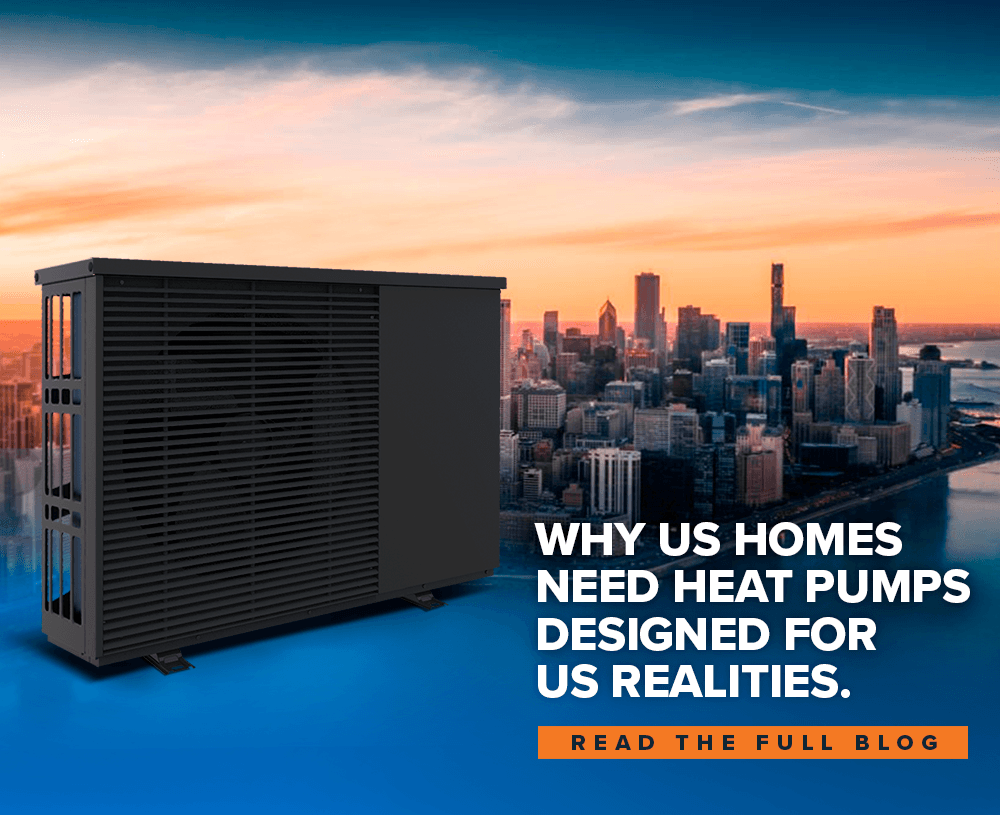
Why the US Needs Heat Pumps Designed for American Homes
To decarbonize heating, manufacturers must rethink more than just policy.
The United States stands at a pivotal moment in the clean energy transition, particularly in the area of heating and cooling. Heat pumps are the leading technology for electrifying residential and commercial HVAC systems. Yet, despite growing adoption, design limitations are quietly holding back broader uptake.
In regions with extreme climates, such as parts of the Midwest and Northeast, homeowners and contractors remain skeptical about the ability of heat pumps to reliably replace gas furnaces. Meanwhile, multi-family housing and smaller homes face installation challenges due to limited indoor space.
To truly scale adoption across America’s diverse housing stock, the solution requires more than policy changes, it demands heat pumps designed specifically for US homes.
One-size-fits-all does not work. Many heat pumps available today are adaptations of European models that do not align with American home sizes, insulation standards, or HVAC expectations. For instance, ductless systems excel in mild climates, whereas much of the US relies on ducted central heating. Units must also be engineered for regional weather extremes and grid variability. Factors such as noise, size, and refrigerant type are increasingly important in dense urban neighborhoods and regulated states.
Manufacturers aiming to succeed nationwide must focus on localized engineering rather than simply meeting certification requirements.
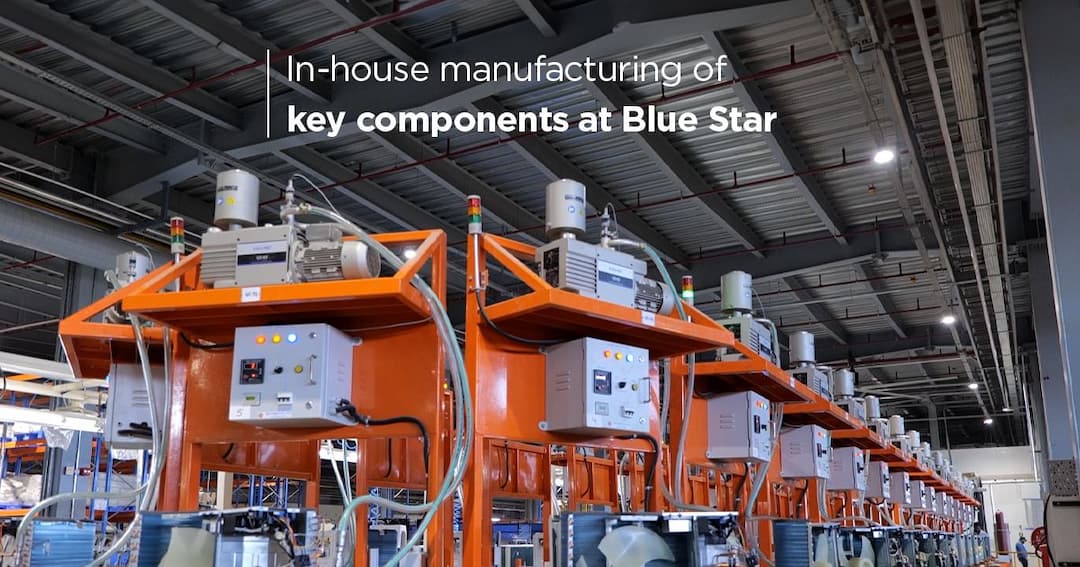
That is where Blue Star comes in. Through our Custom Design Manufacturing (CDM) model, we partner with HVAC brands to develop heat pumps specifically tailored to meet the needs of North America. We help design region-specific solutions that efficiently meet DOE and ENERGY STAR® standards, while optimizing for cost, size, and efficiency. Our flexible engineering and production support accelerate time-to-market, giving brands an edge.
We do not just manufacture, we collaborate to overcome retrofit challenges, advise on refrigerant strategies, including R-290 and R-32, and integrate smart home compatibility.
With nearly 90 million US homes still relying on fossil fuels for heating, many of which are older and have limited insulation and legacy ductwork, affordability and ease of installation are critical. Compact, powerful, pre-configured systems that reduce installation time and overall costs without sacrificing efficiency will unlock this huge retrofit market. Blue Star is actively developing these next-generation platforms.
The policy landscape is rapidly evolving, from federal and state incentives to local electrification mandates, rewarding HVAC brands that act swiftly with a competitive advantage. Yet designing the right product for the US market requires engineering agility, supply chain readiness, and a deep understanding of regulations and customer pain points. Blue Star possesses this knowledge and expertise, delivering it through our CDM model, which offers lower risks in new product launches while maintaining complete control over intellectual property and go-to-market strategies.
If you’re ready to expand or innovate in the US HVAC space, let’s build the future of heat pumps for America together.