From policy confusion to price pressure, Europe’s heat pump market needs a new direction.

Why Heat Pump Adoption in Europe Is Stalling, And What Can Be Done About It
Heat pumps have been promoted for years as a key component in Europe's efforts to reduce carbon emissions. Backed by firm policy commitments and growing public awareness around sustainable living, their rise seemed unstoppable. However, 2024 painted a different picture, one that demands urgent attention.
Instead of another year of strong growth, the European heat pump market contracted. Across 13 major countries, sales dropped by 23%, catching many in the industry off guard. The only bright spot was the UK, where heat pump sales surged by an impressive 63%, driven mainly by generous subsidies and simplified grant procedures.
So, what happened elsewhere? Why is a technology central to the continent’s net-zero ambitions suddenly facing a slowdown?
The Uncomfortable Truth: Adoption Is Hitting Friction Points
Heat pumps, while promising, are encountering familiar barriers —ones that affect both end-users and the broader supply chain. If Europe is to stay on track with its climate goals, we need to confront these challenges head-on.
The Price Problem: High Upfront Costs
Cost remains the most cited deterrent. In many European markets, replacing a traditional gas boiler with an air-to-water heat pump can cost between €10,000 and €16,000. That is often just the base figure. The final bill may rise further if a property requires upgraded radiators, insulation, or hot water systems to optimise performance.
While many countries previously countered this barrier with generous subsidies, that support is beginning to falter. France, for example, recently scaled back its MaPrimeRénov’ programme. In Germany, shifting policy signals have created confusion among both consumers and installers. As financial clarity diminishes, decision-making delays arise, which in turn impact the market.
Installation Bottlenecks and Skills Gaps
Even for homeowners who can afford the upfront investment, installation often proves to be another hurdle.
Unlike boiler replacements, which a contractor can typically complete in one day, heat pump installations may take several days. They require technical precision, home-specific customisation, and a level of training that many HVAC professionals still lack. According to industry estimates, only a small fraction of technicians across Europe are currently qualified to install and service heat pumps.
Adding to the installation challenges is the persistent strain on global supply chains, with key components facing lead times of several months. Due to these factors, scaling the deployment of heat pumps is not a straightforward process.
Turning the Tide: What the Industry Needs Now
At Blue Star, we believe that the solution is not solely dependent on increased subsidies or temporary incentives. While financial support is helpful, what Europe needs is a more sustainable and scalable approach, one rooted in better product design, stronger supply chains, and market-specific thinking.
Our Custom Design Manufacturing (CDM) model is precisely what you need in this situation.
CDM: Built for Europe's Retrofit Reality
In mature markets like Europe, retrofitting is the dominant use case, not new construction. That means products need to be affordable, adaptable, and easy to install in a wide variety of residential settings.
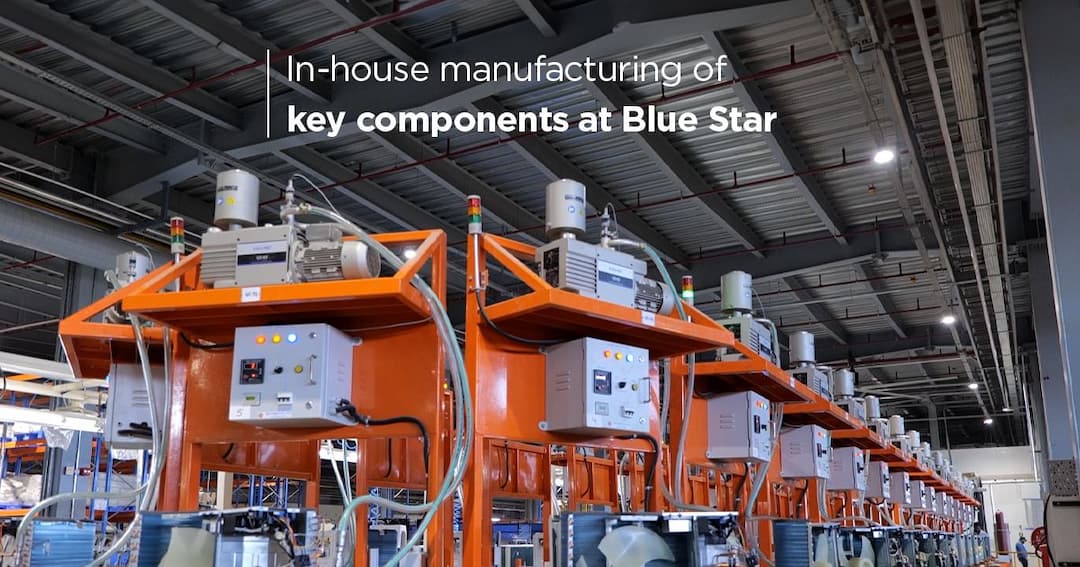
Through our CDM model, we partner with HVAC brands to re-engineer product platforms for improved cost-performance ratios, localise components to mitigate logistics challenges and meet regional compliance requirements, and optimise bill of materials costs without compromising on quality or energy efficiency.
The result is heat pump systems that are easier to install, faster to deploy, and more competitive in price, especially for homes that cannot be completely overhauled.
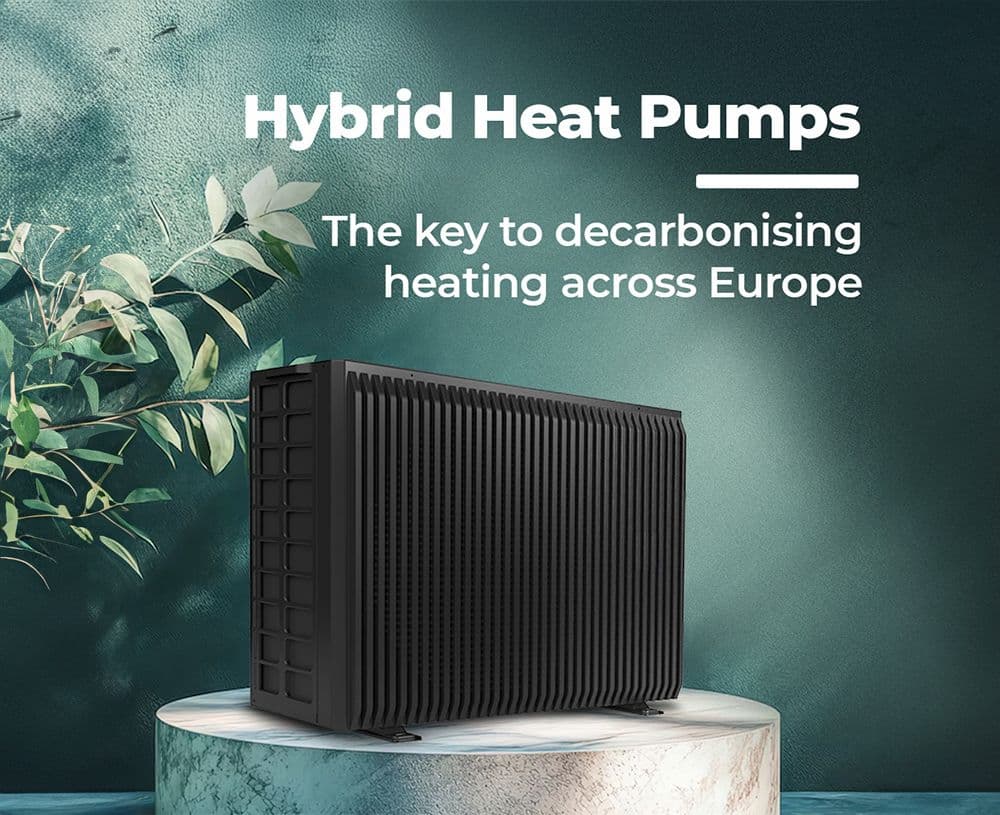
We are also helping our partners adopt hybrid heat pump models, which work in conjunction with existing boilers. These hybrids are gaining traction in markets where fully electric systems are not yet practical. They allow households to reduce emissions and running costs without the need for full-scale infrastructure upgrades, while offering flexibility during the transition period.
These systems also have another benefit. They are typically quicker to install and more compatible with existing home heating systems, helping alleviate pressure on the installer workforce.
The Road Ahead: Opportunities Still Abound
Despite the dip in 2024, the long-term picture remains optimistic. Government targets for building decarbonisation stay in place, consumer awareness of energy efficiency continues to rise, and EU-wide regulations are steadily pushing towards cleaner heating solutions.
This signifies that the fundamentals remain unchanged, but the industry must adapt to the current situation. Strategies that were effective during the boom years may no longer be successful.
The winners in this next phase will be the brands that can balance efficiency, affordability, and adaptability, particularly in retrofit scenarios. Europe does not need more of the same. It needs solutions tailored to its unique constraints and opportunities.
Let Us Build the Future of Low-Carbon Heating, Together
At Blue Star, we are already working with forward-thinking HVAC brands across Europe to help them design, build, and scale the next generation of heat pump solutions, leveraging our CDM capabilities, in-house R&D, and flexible production systems.
If your business is eyeing the European heat pump market, whether you are planning your first product entry or looking to optimise an existing line-up, let’s talk. We do not just help you follow the market; we help you lead it.
Because solving Europe’s heat pump puzzle will not come from waiting. It will come from building smarter, faster, and together.